Source 1200 dpi uv printhead for Wall Printing, Flex, and Custom Jobs
Compare 30 available 1200 dpi uv printhead options from verified suppliers. These units support wall printing, flex materials, and custom applications with resolutions up to 2400 DPI and firing frequencies reaching 43 kHz.
Key considerations
Products List
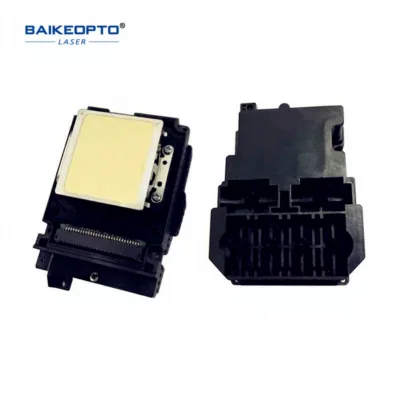


$155.00 - $160.00
Moq: 1




Comprehensive Sourcing Guide
Strategic Sourcing Guide for 1200 DPI UV Printheads
The global market for digital printing components has seen a significant surge in demand for high-resolution UV printheads, specifically those capable of delivering 1200 dpi output. For procurement professionals in the B2B sector, sourcing these critical components requires a disciplined approach that balances technical performance with supply chain reliability. The core keyword "1200 dpi uv printhead" represents a specific intersection of print quality, curing technology, and mechanical precision. This guide outlines the essential factors buyers must evaluate when sourcing these components, ensuring that procurement decisions are grounded in verifiable data and industry standards rather than marketing assertions.
Technical Specifications and Print Performance
When evaluating a 1200 dpi UV printhead, the primary focus must be on the resolution metrics and the physical characteristics of the print head itself. The observed market data indicates that print resolutions vary significantly, with common configurations including 1200 dpi, 1200x1200 dpi, 1200x600 dpi, and 600x600 dpi. Higher resolution settings like 2400 dpi are also available, offering finer detail for specialized applications. Buyers should verify the native resolution of the specific model, as some components list resolutions such as 300 npi/row or 600 npi/2 rows, which may require specific driver configurations to achieve the advertised 1200 dpi output.
The firing frequency is another critical technical parameter. Data suggests that firing frequencies can range from up to 20 kHz to up to 43 kHz, directly impacting the print speed and the ability to handle high-volume production runs. A higher firing frequency generally correlates with faster throughput, but it must be matched with the ink viscosity and the substrate being printed. The nozzle count is equally vital; observed specifications include models with 3200 nozzles, which provide a wide effective print width. The droplet size, typically ranging from 3.5 pl to 12 pl, determines the smoothness of gradients and the sharpness of text. Smaller droplets allow for higher detail but may require more passes to achieve full coverage, affecting overall production speed.
Electrical Compatibility and Operational Parameters
Beyond optical resolution, the electrical interface and power requirements of the printhead dictate its integration into existing printing machinery. The operating voltage is a strict constraint; observed working ranges include 24V ± 10% and capping voltages between 24-30V. Deviations from these ranges can lead to immediate hardware failure or inconsistent ink ejection. The connector type is another non-negotiable specification. Standard interfaces observed in the market include 80-pin connectors, which must align perfectly with the printer's mainboard or controller.
Power consumption is a significant factor for operational efficiency. The gross power for systems utilizing these printheads can be as high as 250W, though this often includes the entire printing system rather than just the head. Buyers must also consider the ink type compatibility. The market supports a diverse range of inks, including UV, DTG textile ink, pigment, dye, and DTF. However, UV inks are specifically noted for their curing requirements, which necessitate precise voltage control and thermal management. The automatic grade of the equipment is typically set to "Automatic," implying that the printhead is designed to work with automated maintenance cycles, such as capping and wiping, which are essential for preventing nozzle clogging in UV environments.
Compliance, Certification, and Material Standards
In the B2B procurement landscape, compliance is not merely a formality but a prerequisite for market access and liability protection. The observed certification landscape for these components includes CE, ISO, and ISO RoHS standards. These certifications indicate that the product meets specific safety, health, and environmental protection requirements. Buyers must verify that the specific batch of printheads they are purchasing carries valid certification documentation, as the presence of a certification mark on a product page does not guarantee that every unit in the supply chain adheres to the same standard.
The material composition of the printhead and its packaging also plays a role in compliance. The printing material compatibility often includes flex, wall, and other substrates, requiring the printhead to withstand various chemical interactions. The packaging standard is equally important; observed specifications mention protective box packaging with dimensions such as 30x25x20 cm for single packages. This ensures that the delicate internal components, such as the precision core microtfp technology, are not damaged during transit. Furthermore, the condition of the product is listed as "New," which is a critical verification point to avoid purchasing refurbished units that may have reduced lifespan or inconsistent performance.
Cost Drivers and Procurement Economics
Understanding the cost structure of 1200 dpi UV printheads is essential for budgeting and total cost of ownership (TCO) analysis. The observed price range in the market is vast, spanning from $82 to $51,800. This extreme variance is not indicative of a single product type but rather reflects the difference between individual components, replacement heads, and complete printing systems. For a buyer sourcing a specific printhead component, the lower end of this range might represent a single replacement unit, while the higher end likely includes the entire printer assembly with the head integrated.
The Minimum Order Quantity (MOQ) is another economic factor. The observed data shows an MOQ range of 1-1, suggesting that many suppliers allow for the purchase of single items. This flexibility is beneficial for small-scale testing or replacement scenarios but may not be available for bulk industrial orders. Buyers should be aware that while the unit price might be low, the total cost includes shipping, potential import duties, and the cost of downtime if the supply chain is disrupted. The selling units are typically listed as "Single item," which simplifies the ordering process but requires careful inventory management to ensure a steady supply of spare parts.
Supplier Evaluation and Quality Assurance
Selecting the right supplier requires a rigorous evaluation process that goes beyond the information provided on a product page. Buyers should verify the brand name and model number to ensure authenticity. For instance, brands like Baikeopto and models such as TX800 or I1600-U1 are specific identifiers that must be cross-referenced with the manufacturer's official documentation. The place of origin is also a key indicator of quality control standards; observed data lists Japan as a place of origin, which is often associated with high manufacturing precision. However, buyers must confirm the actual manufacturing location for each batch, as components can be assembled in different facilities.
Quality control measures should be a central part of the supplier selection criteria. The technology used, such as Precisioncore Microtfp, is a hallmark of advanced engineering. Buyers should request test results or performance data that validate the claimed specifications, such as the effective print width of 33.8 mm or the distance between mouths of 1/300 inch. The warranty period, typically observed as 1 Year, is a strong indicator of the supplier's confidence in their product. A robust warranty should cover defects in materials and workmanship, providing a safety net for the buyer. Additionally, the availability of customization options should be assessed, as some projects may require specific modifications to the standard specifications.
Applications and Long-Term Procurement Strategy
The versatility of 1200 dpi UV printheads makes them suitable for a wide array of applications. The observed usage cases include wall printing, flex printing, and textile applications. The ability to print on diverse media, such as walls and flex materials, highlights the adaptability of these components. The print speed, observed as up to 10 ppm, is a key metric for production planning. Buyers should calculate their required throughput based on the specific application and ensure that the chosen printhead can meet these demands without compromising on quality.
Long-term procurement considerations involve planning for maintenance and replacement. The single gross weight of 1.000 kg and the single package size of 30x25x20 cm are practical details that affect logistics and storage. Buyers should establish a relationship with suppliers that offers reliable lead times and consistent stock levels to prevent production stoppages. The compatibility with various inks, including UV, pigment, and dye, allows for future expansion into new product lines. However, switching ink types may require recalibration or firmware updates, which should be factored into the procurement strategy.
Comparison of Key Printhead Specifications
To assist in the decision-making process, the following table summarizes the key technical specifications observed in the market for 1200 dpi UV printheads. This comparison highlights the variance in performance metrics that buyers must consider when selecting a component.
| Specification | Observed Range / Value | Relevance to Procurement |
|---|---|---|
| Print Resolution | 1200 dpi, 1200x1200 dpi, 2400 DPI | Determines image clarity and detail level. |
| Firing Frequency | Up to 20 kHz, Up to 43 kHz | Impacts print speed and throughput capacity. |
| Nozzle Count | 3200 Nozzles | Affects print width and coverage efficiency. |
| Droplet Size | 3.5 Pl to 12 Pl | Influences gradient smoothness and ink usage. |
| Operating Voltage | 24V ± 10%, 24-30V Capping | Critical for electrical compatibility and safety. |
| Connector Type | 80-Pin | Must match printer controller interface. |
| Ink Compatibility | UV, DTG, Pigment, Dye, DTF | Determines versatility for different substrates. |
| Warranty | 1 Year | Indicates supplier confidence and risk mitigation. |
| Place of Origin | Japan | Often correlates with manufacturing precision. |
| Certification | CE, ISO, ISO RoHS | Ensures compliance with safety and environmental standards. |
Conclusion
Sourcing a 1200 dpi UV printhead is a complex task that requires a deep understanding of technical specifications, compliance requirements, and market dynamics. Buyers must navigate a wide range of prices, from $82 to $51,800, and carefully evaluate the specific needs of their application against the observed capabilities of the components. By focusing on verified data such as firing frequency, nozzle count, and electrical compatibility, procurement professionals can make informed decisions that ensure high-quality output and operational efficiency. The presence of certifications like CE and ISO, along with a clear warranty structure, provides a foundation for trust, but continuous verification of the actual product condition and origin remains essential. Ultimately, a strategic approach that balances technical performance with supply chain reliability will yield the best results for B2B buyers in the digital printing sector.
FAQs
What is the typical print resolution for 1200 dpi uv printheads?
The typical print resolution is 1200 dpi, with options reaching 2400 DPI for finer detail. Some models also support 1200x1200 dpi or 1200x600 dpi configurations to meet specific application needs.
Which ink types are compatible with these printheads?
These printheads are compatible with UV ink, DTG textile ink, pigment, dye, and DTF inks. This versatility allows printing on diverse media including flex and wall surfaces without changing the head.
Can I find 1200 dpi uv printheads with CE certification?
Yes, many units come with CE, ISO, and ISO RoHS certifications. These standards ensure safety and environmental compliance for industrial use in various global markets.
How does firing frequency affect print speed?
Firing frequency impacts throughput, with observed rates up to 43 kHz for faster production. Higher frequencies generally allow for quicker print speeds while maintaining high resolution quality.
What is the warranty period for these components?
The standard warranty period is typically 1 Year. This coverage protects against defects in materials and workmanship, ensuring reliability for business operations.
Which connector type is standard for these heads?
The standard connector type is an 80-Pin interface. This specific connector must align with the printer controller to ensure proper electrical communication and operation.
What is the minimum order quantity for single items?
The minimum order quantity is often 1 unit for single item purchases. This allows buyers to test components or replace parts without committing to large bulk orders.